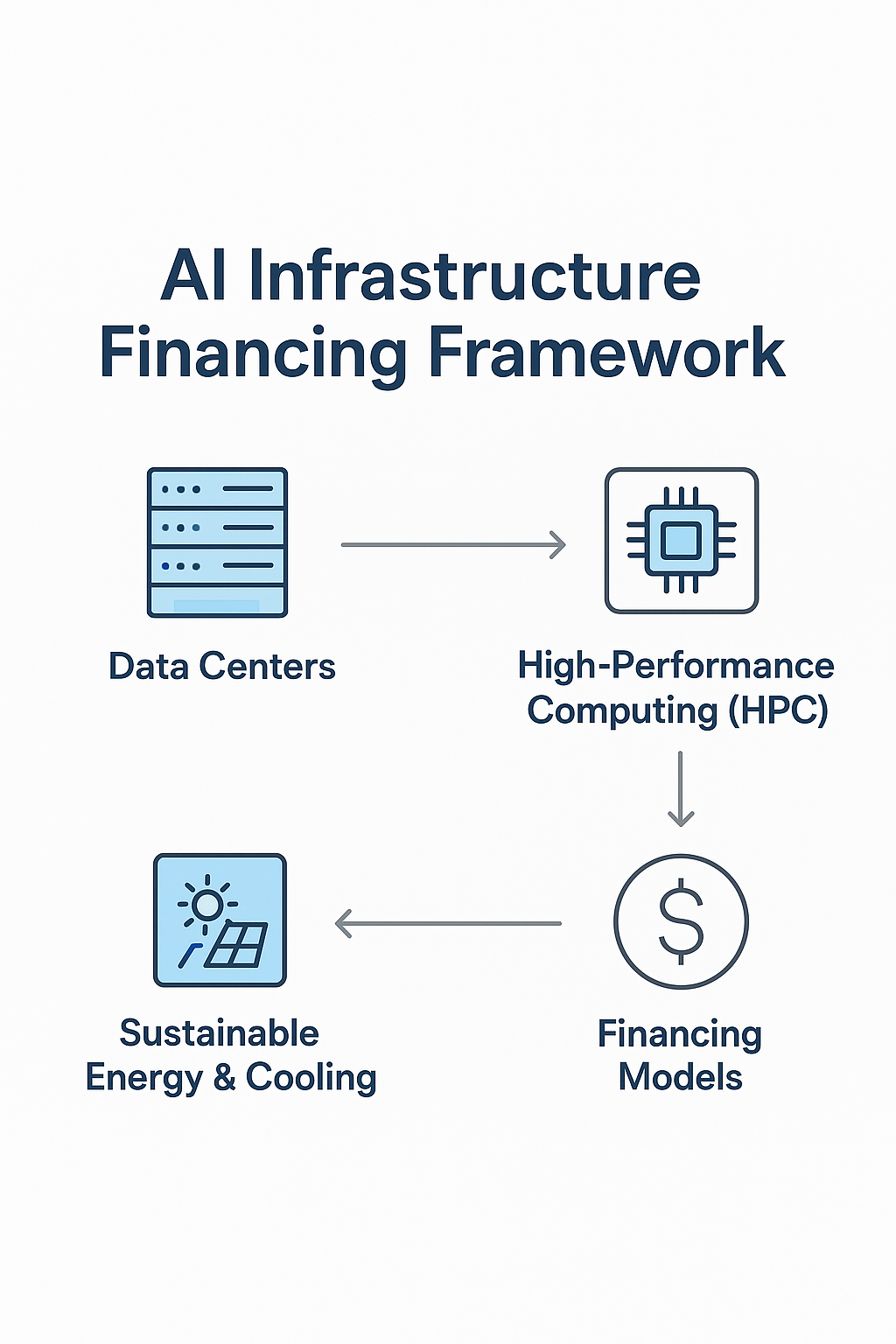
AI Infrastructure Financing is becoming one of the most important global investment categories. With AI systems accelerating across industries—from healthcare and finance to robotics and transportation—the need for robust, scalable, and energy-efficient infrastructure has never been greater.
In this article, we explore what makes AI infrastructure essential, how financing models work, and which strategies organizations can use to build a strong foundation for long-term AI success.
Understanding the Foundations of AI Infrastructure
Why Data Centers Matter in AI Scalability
Data centers are the heart of AI infrastructure. They host large-scale compute clusters, storage systems, and networking equipment. With AI models growing exponentially, organizations must invest in data centers capable of handling high throughput, massive datasets, and demanding computation.
The Role of High-Performance Computing (HPC) in AI Growth
High-Performance Computing enables faster training times, real-time inferencing, and complex simulations. HPC clusters are essential for organizations working on generative AI, robotics, and predictive modeling.
Energy Demands and Cooling Systems in AI Operations
AI workloads generate significant heat and energy consumption. Proper cooling systems and sustainable power sources such as hydro, solar, or wind energy are crucial for long-term operational stability.
Key Components of AI Infrastructure that Require Financing
GPUs, TPUs, and Advanced Processors
Modern AI depends on specialized chips such as GPUs and TPUs. These components often represent 40–60% of infrastructure spending.
Networking Equipment and Fiber Infrastructure
High-bandwidth networking hardware ensures rapid data flow between nodes, reducing latency and optimizing performance.
Cloud vs On-Premise Infrastructure Considerations
Companies must decide whether to invest in on-premise systems or leverage cloud-based infrastructure. Each option involves different financing models and long-term costs.
Major Financing Models for AI Infrastructure
Equity Financing
Equity financing allows growing companies to access capital without immediate repayment but requires sharing ownership.
Debt Financing
Organizations may secure loans or credit facilities to build AI infrastructure while retaining ownership.
Joint Ventures & Strategic Partnerships
Collaborating with hardware manufacturers or cloud providers can significantly reduce upfront costs.
Public-Private Collaborations
Governments frequently partner with enterprises to support AI advancements through funding, land grants, or tax incentives.
Benefits of AI Infrastructure Financing for Enterprises
Reduced Capital Expenditure
Financing models remove the need for large upfront investments.
Faster Deployment of AI Solutions
With accessible capital, enterprises can roll out AI systems more quickly.
Improved Reliability and Risk Mitigation
Financed infrastructure allows testing and upgrades without major financial disruptions.
Challenges in AI Infrastructure Financing
High Initial Costs
Even with financing, AI infrastructure can be costly to operate and maintain.
Regulatory and Compliance Issues
Data privacy laws can add complexity to infrastructure development.
Rapid Technology Obsolescence
Hardware evolves fast, and financing agreements must account for refresh cycles.
How Governments Influence AI Infrastructure Financing
Tax Incentives and Grants
Many nations offer incentives to support AI R&D. For example, see government initiatives listed at OECD AI Policy Observatory.
Policies Supporting AI Development
Strategic national AI policies encourage private sector participation and large-scale investments.
AI Infrastructure Financing Strategies for Startups
Optimal Budget Allocation
Startups should prioritize mission-critical AI components and scale gradually.
Leveraging Cloud Credits
Major cloud providers offer free credits, significantly reducing early-stage costs.
Attracting Investors with Scalable Roadmaps
Investors prefer startups with clear infrastructure expansion plans.
AI Infrastructure Financing for Large Enterprises
Hybrid Infrastructure Plans
Enterprises benefit from combining cloud and on-premise systems for flexibility and resilience.
Building Resilient Multi-Region Setups
Multi-region architecture ensures uptime and reliability during outages.
Future Trends in AI Infrastructure Financing
AI-Optimized Green Energy Financing
As sustainability becomes vital, green-powered data centers are gaining momentum.
Edge AI Expansion
Edge infrastructure reduces latency and improves local processing capabilities.
Rise of Sovereign AI Infrastructure Funding
Countries are funding their own sovereign AI infrastructures to protect data and enhance national competitiveness.
FAQs About AI Infrastructure Financing
1. What is AI Infrastructure Financing?
It refers to funding models used to build, operate, and scale AI-related hardware and systems.
2. Why is it so expensive to build AI infrastructure?
Costs arise from specialized chips, data centers, energy, and skilled labor.
3. Can startups afford AI infrastructure?
Yes—using cloud credits, leasing models, and hybrid systems.
4. Is cloud cheaper than on-premise infrastructure?
It depends on workload size, duration, and security requirements.
5. How do governments support AI infrastructure?
Through grants, subsidies, incentives, and policy reforms.
6. What are the biggest risks in AI infrastructure financing?
Rapid hardware obsolescence and evolving regulations.
Conclusion
AI Infrastructure Financing is a cornerstone of modern AI development. Whether you’re a startup, enterprise, or government organization, choosing the right financing model can determine how efficiently your AI systems grow. With proper planning, businesses can scale sustainably, remain competitive, and build future-proof AI ecosystems.