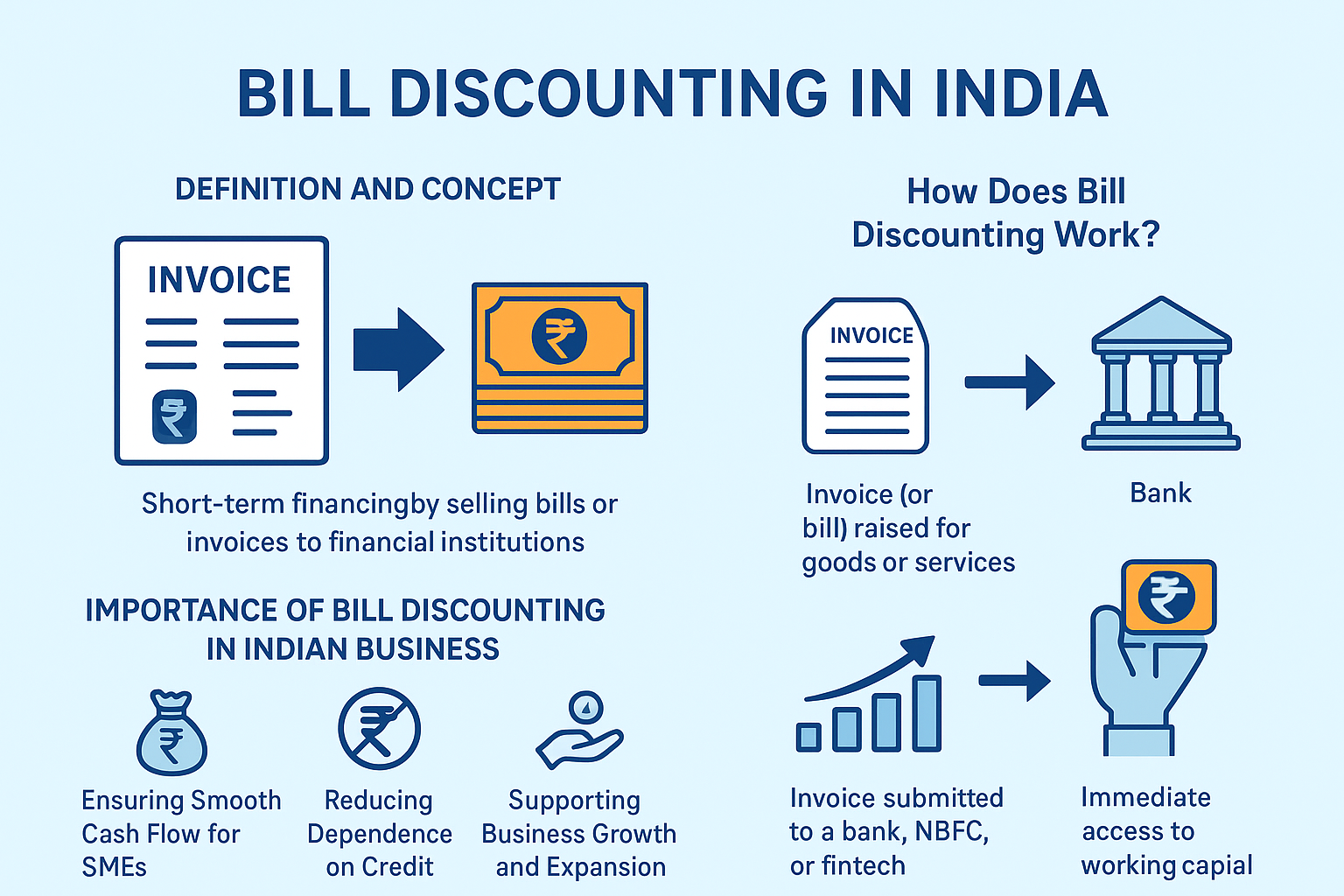
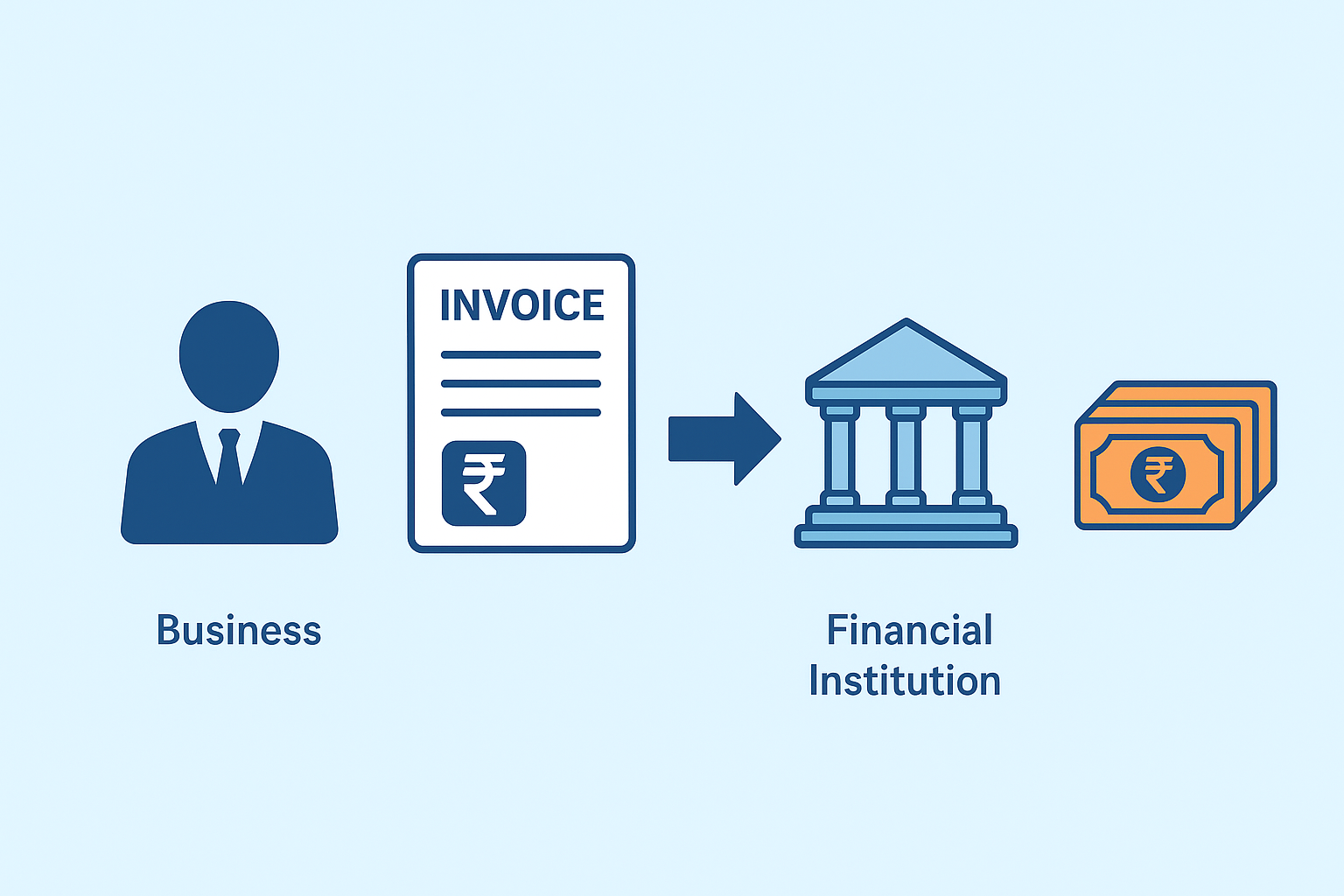
Bill Discounting is a short-term financing solution that allows businesses to get immediate cash by selling their trade receivables (bills or invoices) to banks, NBFCs, or fintech companies. Instead of waiting 30–90 days for customers to pay, businesses can convert receivables into instant working capital.
Difference Between Bill Discounting and Invoice Financing
While both involve receivables, bill discounting is typically used for trade bills backed by goods and services, whereas invoice financing is more flexible and often facilitated by fintech platforms.
Importance of Bill Discounting in Indian Business
Ensuring Smooth Cash Flow for SMEs
India’s SMEs often face delayed customer payments. invoice discounting ensures steady cash flow, helping businesses cover daily expenses like raw materials, salaries, and logistics.
Reducing Dependence on Credit
Instead of relying on high-interest loans or informal credit, SMEs can use invoice discounting to access funds at lower rates.
Supporting Business Growth and Expansion
Quick access to capital helps SMEs invest in growth opportunities, expand operations, and build credibility with suppliers.
How Does Bill Discounting Work?
Step-by-Step Process
Business sells goods/services to a customer and raises an invoice.
Instead of waiting for payment, the business submits the bill to a bank/NBFC/fintech.
The lender verifies the bill and advances a percentage (usually 75–90%) of the invoice value.
Once the customer pays, the lender deducts charges and releases the remaining balance.
Role of Banks, NBFCs, and Fintechs
Banks: Offer bill discounting primarily to large corporates.
NBFCs: More flexible for SMEs and mid-sized businesses.
Fintechs: Platforms like KredX, M1xchange, and Invoicemart enable digital bill discounting with faster approvals.
Example of Bill Discounting in Practice
A textile exporter in Surat issues an invoice of ₹10 lakh with 60 days payment terms. Through a fintech, they receive ₹8.5 lakh immediately, ensuring uninterrupted operations.
Types of Bill Discounting in India
Invoice Discounting
Converting unpaid invoices into cash through NBFCs or fintech platforms.
Trade Receivables Discounting (TReDS)
An RBI-regulated platform (like RXIL, A.TReDS, M1xchange) where SMEs can discount bills with multiple financiers.
Supplier Bill Discounting
Suppliers get funds by discounting bills raised on large buyers.
Export Bill Discounting
Helps exporters receive payment before overseas buyers clear invoices.
Key Features of Bill Discounting
Short-Term Financing
: 30–120 days
Collateral-Free
: Based on receivables, not assets
Quick Access
: Faster than traditional loans
Advantages of Bill Discounting in India
Faster Cash Flow
No need to wait 90 days for customers—cash is available immediately.
Improved Business Credibility
Businesses gain credibility by paying suppliers and employees on time.
Submit bills, KYC, and financial records for verification.
Fintech Platforms
Fast digital approval via platforms like KredX and M1xchange.
Role of RBI-Approved TReDS Platforms
Enable competitive bidding by multiple financiers, ensuring better rates for SMEs.
Alternatives to Bill Discounting
Overdraft Facilities
Business Lines of Credit
Invoice Factoring
Best Practices for Businesses
Choose the Right Platform
(Bank, NBFC, Fintech, or TReDS)
Maintain Customer Relations
to ensure invoice authenticity
Calculate True Costs
including discounting charges
Case Studies of Bill Discounting in India
SME Textile Exporter in Surat
Used TReDS to secure ₹50 lakh funding for export orders.
Startup in Bengaluru
Leveraged fintech platforms for payroll during fundraising delays.
Manufacturing Firm in Pune
short-term working capital solution worth ₹2 crore to fund raw material purchases.
Future of Bill Discounting in India
Digital Growth
: Fintech adoption is booming.
Government Push
: RBI’s TReDS platform is expanding reach.
SME Adoption
: More SMEs will use bill discounting for growth.
FAQs on Bill Discounting in India
1. What is the interest rate for bill discounting in India?
Usually 12–18% annually, depending on the platform.
2. Is bill discounting the same as factoring?
No. In factoring, the financier manages collections, while in discounting, the business remains responsible.
3. Can startups use bill discounting?
Yes, if they have invoices from reliable clients.
4. Which fintechs offer bill discounting in India?
KredX, M1xchange, RXIL, Invoicemart, and Oxyzo.
5. Is collateral required?
Generally no, since receivables act as security.
6. Who regulates bill discounting in India?
RBI regulates bill discounting via the TReDS framework.
Conclusion: Is Bill Discounting the Right Choice for Your Business?
Bill Discounting in India is a game-changer for SMEs, startups, and exporters struggling with delayed customer payments. By converting invoices into cash, businesses can maintain liquidity, pay suppliers, and grow faster.
With RBI pushing TReDS adoption and fintechs making discounting seamless, the future looks promising. For businesses seeking quick, collateral-free working capital, bill discounting is one of the best solutions.